Under the Counter and Off the Grid: The Quiet Revolution Happening in West Country Food
The message arrives on a Thursday evening, via a WhatsApp group with a name that sounds innocuous — something like "Friday Veg" or "Farm Gate Folks". It lists what's available this week: a dozen free-range eggs, half a lamb, three varieties of raw milk cheese, and a jar of something described only as "the good honey". You reply with what you want. You collect it from a gate, a barn, or occasionally someone's kitchen. You pay in cash or bank transfer. No receipt. No packaging. No questions asked.
This is the West Country's underground food economy, and it is considerably larger than most people realise.
A Network Built on Trust
Across Devon, Cornwall, and Somerset, a parallel food system has been quietly expanding for years. It encompasses everything from informal vegetable box swaps between neighbours to clandestine pop-up suppers held in farm buildings, from direct-sale meat arrangements that bypass any formal retail channel to kitchen-table cheesemakers supplying a devoted clientele who know better than to ask too many questions about licensing.
None of this is entirely new. Rural communities have always traded food informally. But the scale and sophistication of what's happening now — organised via social media, encrypted messaging apps, and word of mouth that spreads with remarkable efficiency — represents something qualitatively different from the occasional surplus courgette left on a wall.
"It's a genuine economy," says Dr Rachel Coombe, a food systems researcher at the University of Exeter who has been studying informal food networks in the South West for three years. "It has its own pricing structures, its own trust mechanisms, its own quality standards. It's just not visible to the formal system."
The Producers
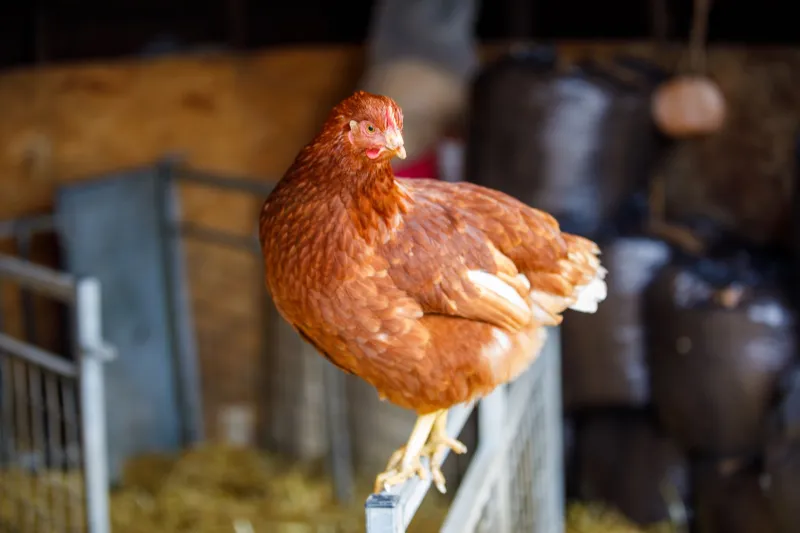
Anna, who farms a smallholding in mid-Devon and asked that we not use her full name, has been selling directly to local customers for four years. She keeps a small herd of pigs, a flock of chickens, and a polytunnel of vegetables. None of it goes through a retailer. All of it goes to a list of about forty regular customers who she knows personally.
"I couldn't make it work any other way," she says. "The margins through a farm shop or a market are too thin. Selling direct means I actually get paid a fair price, and my customers know exactly where their food comes from. I know their kids' names. They know my pigs' names. It's a completely different relationship to buying something shrink-wrapped from a shelf."
Her operation sits in a legal grey zone. Some of what she does is entirely above board — selling vegetables direct from the farm gate requires no particular licence. But other elements are more complicated. Raw milk sales are legal in England if you're a registered producer, but the registration requirements are onerous. Selling home-produced cheese involves food hygiene regulations that can be difficult and expensive to navigate for a small producer.
"I'm not trying to poison anyone," she says, with some exasperation. "I know this food better than any food safety inspector ever could. But the regulations weren't written for people like me. They were written for factories."
The Pop-Up Supper Scene
A different corner of this world operates after dark. Across Somerset and Devon in particular, a circuit of informal supper clubs and pop-up dining events has developed that bears little resemblance to anything you'd find in a restaurant guide.
These are held in barns, converted outbuildings, farmhouse kitchens, and occasionally fields. They're advertised only to trusted networks. Tickets — if they're called that — are sold informally. The food is often extraordinary: hyper-local, seasonal, and cooked by people who, in several cases, have professional culinary training but have chosen to operate entirely outside the licensed hospitality sector.
Marcus, a former chef who now runs a small farm in Somerset, hosts eight or nine such evenings a year. Attendance is capped at twenty people. The menu changes entirely each time, based on what he's grown or reared or foraged that week.
"It's the most honest cooking I've ever done," he says. "The food is right there — I harvested it yesterday. The people eating it know that. There's no performance of it. It just is."
He's aware that operating without a food business registration puts him in a difficult position. "I've thought about it a lot. I'm not cavalier about food safety — I take it very seriously. But the system isn't designed for what I'm doing, and I'm not sure it needs to be."
What the Regulators Say
The official position, as expressed by the Food Standards Agency, is clear: anyone regularly selling food to the public should be registered as a food business, regardless of scale. Registration is free and, in theory, straightforward. But enforcement is patchy — local authorities vary enormously in how actively they pursue informal producers — and many small operators simply fall beneath the radar entirely.
"We're not trying to shut down farmers' markets or community food sharing," says a spokesperson for one South West local authority, speaking generally rather than about specific cases. "But if someone is running what is effectively a food business without registration, there are genuine public health reasons why that matters. It's not bureaucracy for its own sake."
Dr Coombe is more measured. "The regulatory framework was designed for a food system that looks very different from what's emerging in places like this. The question isn't whether these producers should be regulated — it's whether the regulation we have is fit for purpose."
The Customers
For the people buying through these networks, the appeal is rarely about avoiding the supermarket on principle — though that's often part of it. It's more personal than that.
"I know exactly what I'm eating," says Jenny, a teacher from near Taunton who buys most of her meat and dairy through informal networks. "I've visited the farms. I've seen how the animals are kept. I trust it in a way I simply don't trust a supermarket, regardless of what the label says."
She acknowledges the tension. "I understand there are rules for a reason. But the food I get this way is fresher, better, and honestly safer in my view than most of what I'd find in a shop. The system feels upside down sometimes."
The Future of the Fringe
Whether this informal economy represents the future of West Country food or a worrying blind spot depends largely on who you ask and what you think food systems are ultimately for. It is, at minimum, a signal — a clear indication that significant numbers of producers and consumers have decided that the formal food economy isn't meeting their needs, and have quietly built something else alongside it.
Dr Coombe thinks the trend will continue regardless of regulatory pressure. "The demand is there. The producers are there. The technology to connect them is there. The question is whether the formal system adapts to accommodate it, or whether it continues to pretend it isn't happening."
Anna, back on her Devon smallholding, is less interested in the policy debate. She's got pigs to feed and a WhatsApp message to send. "Whatever happens," she says, "people will always want to know where their food comes from. That's not going away."
The gate will be open on Saturday. Bring cash.