Stamp of Approval: The Communities Scrapping to Save Their Last Post Office
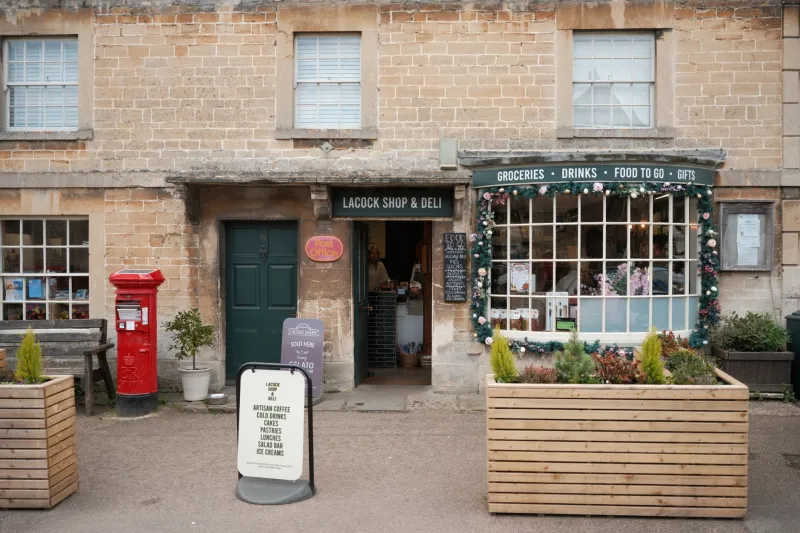
On a Tuesday morning in a small Devon village that would rather not be named — for fear of drawing the wrong kind of attention — Margaret is doing what she's done for thirty-one years. She's sorting the post, fielding a query about a lost parcel, helping an elderly neighbour renew his driving licence, and simultaneously selling a birthday card, two stamps and a tin of biscuits shaped like a red telephone box. It's barely nine o'clock.
"People think a post office is just somewhere you send letters," she says, not looking up. "But for half the people who come through that door, this is the only reason they leave the house."
Margaret is one of hundreds of rural postmasters across the West Country quietly holding the line against a tide of closures, branch consolidations and what critics call the Post Office Ltd's systematic retreat from the communities that need it most. Since 2000, the UK has lost around 7,000 post offices. The rural South West has been hit hard.
What Happens When the Doors Shut
The headline numbers don't fully capture the human cost. In Somerset alone, several villages have lost their post office in the past five years, with services folded into the nearest town — sometimes ten or fifteen miles away. For the elderly, the disabled, those without cars or reliable bus services, that distance might as well be a hundred miles.
In one Dorset village, residents launched a petition after their local branch was earmarked for closure. They gathered over four hundred signatures in a community of fewer than eight hundred people. The branch closed anyway.
"The consultation process is a joke," says local councillor David Hennessy, who's been fighting Post Office Ltd on behalf of rural constituents for three years. "They go through the motions — they hold a meeting, they take comments — and then they do exactly what they were always going to do. Communities feel completely powerless."
Post Office Ltd, for its part, maintains that it is committed to maintaining access to services and that the network has stabilised in recent years following government investment. A spokesperson told us that no area should be left more than three miles from a post office. In rural West Country terrain, three miles without a car is a very different thing to three miles on a city street.
The Postmaster's Bargain
What many people outside the sector don't appreciate is how precarious the postmaster's own position is. These are not salaried employees of a public institution. They are independent operators — often running the post office as one arm of a broader village shop or newsagent — who receive a remuneration package from Post Office Ltd that many describe as barely viable.
"I earn less per hour running the post office counter than I'd earn stacking shelves at a supermarket," says one postmaster in Cornwall who asked not to be identified. "I do it because someone has to. Because if I shut that counter, nobody else is going to open it."
The Horizon IT scandal — which saw hundreds of subpostmasters wrongly prosecuted for financial shortfalls caused by faulty software — cast a long shadow over the sector. Many postmasters who lived through that era, or watched colleagues lose their homes, their livelihoods and their reputations, are deeply wary of the institution they nominally represent.
"Trust is broken," says one former postmaster in Somerset, who left the role after twenty years. "You give your life to that counter and then you find out the organisation you were serving didn't have your back at all. It changes how you feel about everything."
Anchors, Not Amenities
The language used by Post Office Ltd and the government tends to frame post offices as services — transactional, measurable, replaceable by digital alternatives. The communities fighting to keep them open use a different word: anchor.
In a North Devon village, the post office sits inside a converted farmhouse that also serves as a community shop, a lending library and an informal gathering point for the village's older residents. The postmistress, who took on the role eight years ago when her predecessor retired with no replacement lined up, runs the counter three mornings a week.
"People come in and they chat," she says. "They find out who's ill, who needs shopping done, who's just come out of hospital. That's not a service you can replicate on a website."
Research consistently supports what these communities are saying instinctively. Social isolation in rural areas is a growing public health crisis, and local amenities — post offices, pubs, village shops — play a measurable role in keeping people connected. When they go, something harder to quantify goes with them.
Fighting Back
Not every community is accepting defeat quietly. In several West Country villages, residents have moved to take ownership of their post office themselves, running it as a community enterprise or co-operative. It's not easy — the regulatory framework is complex, funding is limited and the hours are brutal — but where it's worked, it's worked well.
A community-owned post office and shop in Somerset recently celebrated its fifth anniversary, having taken over from a private operator who could no longer make the numbers add up. The committee of volunteers who run it have turned a modest surplus for the past two years.
"We had to learn everything from scratch," admits one of the founding members. "Ordering stock, managing the post office contract, getting the community to actually use it. But people did show up. Because they understood what was at stake."
That, perhaps, is the quiet lesson of the post office fight. These institutions endure not because they're profitable or efficient or modern, but because the communities around them decide they matter enough to save. Margaret, still sorting her post in Devon, already knows this.
"I'll keep going as long as I can," she says. "And when I can't, I just hope someone else steps up. Because the day this closes is the day this village stops being a village."
If your local post office is under threat of closure, Post Office Ltd is required to run a public consultation period before any branch closes. Details of live consultations can be found at postoffice.co.uk.