Shooting from the Margins: How West Country Filmmakers Are Telling Britain's Untold Stories

Photo: Manfred Werner - Tsui, CC BY-SA 3.0, via Wikimedia Commons
There's a moment in almost every conversation with a West Country filmmaker when they mention London — not with bitterness, exactly, but with the weary recognition of someone who's spent years being told the party's somewhere else. The funding bodies are there. The commissioners are there. The networking drinks are definitely there. And yet, here they are: in a converted barn outside Totnes, or a repurposed warehouse on the edge of Falmouth, making films that are turning heads at festivals and landing deals that would once have seemed impossible from this far south-west.
Something has shifted. And it's worth paying attention.
Not Heritage. Not Holiday. Something Else Entirely.
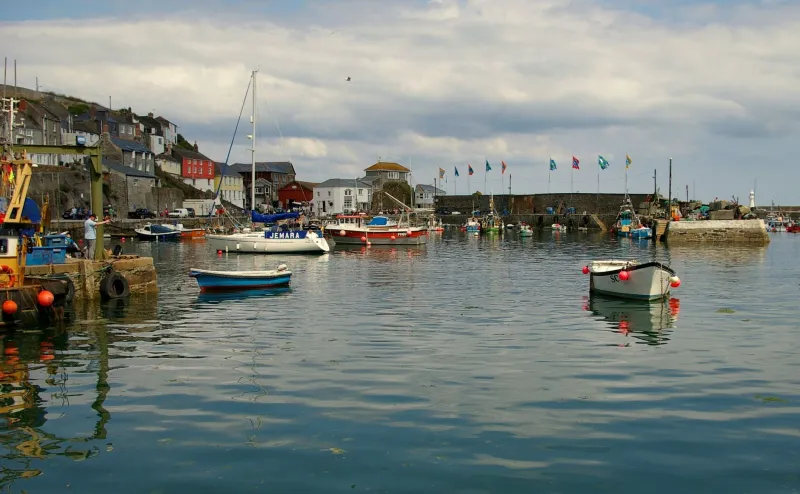
For a long time, the dominant image of West Country screen production was pretty predictable — rolling moorland, thatched roofs, a detective with a complicated past. The region has served as a scenic backdrop for decades, its landscapes rented out to productions that parachute in, film for a fortnight, and leave without hiring a single local grip. That model hasn't disappeared, but it's no longer the only story.
"People assume that if you're making something here, it's got to be about fishing villages or Poldark-adjacent drama," says Cara Whitfield, a Bristol-born producer who relocated to Exeter four years ago and has since co-produced two feature documentaries that screened at Sheffield Doc/Fest. "But we're not interested in that. We're interested in the people who actually live here — the complexity of rural poverty, the housing crisis, the communities that don't make it onto any tourist board leaflet."
Her latest project, currently in post-production, follows three young people navigating the near-impossibility of building a life in a county where second homes have hollowed out entire villages. It's not a comfortable watch, by her own admission. It's also attracted backing from a Scandinavian broadcaster, which, she notes with some amusement, is more than any UK commissioner has offered so far.
The Crew Are Here. The Infrastructure Is Growing.
One of the persistent myths about making films outside London is that the talent simply isn't there. Ask anyone actually working in the West Country and they'll tell you that's rubbish — and increasingly, the numbers back them up.
Falmouth University has been quietly producing technically accomplished graduates for years, many of whom are now choosing to stay rather than make the traditional pilgrimage north-east. The University of Exeter runs a thriving film programme. And organisations like Screen Cornwall and the South West Film Studios in Plymouth have been building out the kind of physical infrastructure — sound stages, editing suites, equipment hire — that makes sustained production genuinely viable.
"Five years ago, if you needed a particular piece of kit, you were either renting it up from London or doing without," says Dan Okafor, a director of photography based in Penzance who has worked on everything from music videos to a BAFTA-nominated short. "Now I can source almost everything I need within an hour's drive. That changes the economics of a shoot completely."
The knock-on effect is a virtuous cycle that feels, for once, like it might actually be virtuous. Local crews hire local caterers, use local locations, stay in local accommodation. The money circulates rather than evaporating back up the M5.
Finding the Money Without Moving to Soho
Funding remains the perennial headache. The BFI's regional distribution has improved, but filmmakers across the South West are frank about the structural disadvantages of being far from the rooms where decisions get made. Several producers interviewed for this piece described the same experience: pitching work that commissioners loved in principle, then watching it stall because the creative team wasn't based somewhere with a London postcode.
The response, in many cases, has been to look elsewhere. European co-production deals, American streaming platforms with an appetite for international content, arts council grants that reward community engagement — these have all become part of the funding patchwork that West Country producers are stitching together with considerable ingenuity.
"You have to be more creative about money when you're not in the centre," says filmmaker and producer Jess Tremaine, whose production company operates out of a shared workspace in Bridgwater. "But honestly? I think it makes better films. You can't afford to be precious. You can't afford to make something that doesn't have a genuine reason to exist."
Her company recently completed a six-part drama series shot entirely in Somerset, with a predominantly local cast and crew. It's currently in conversation with two streaming platforms. She won't say which ones, but she's smiling when she mentions it.
The Stories That Actually Need Telling
What unites the filmmakers we spoke to — beyond geography and the shared experience of expensive coffee on trains to London — is a conviction that the West Country has stories worth telling on their own terms, not as backdrop or comic relief or pastoral nostalgia.
Stories about fishing communities facing extinction. About young farmers inheriting debt alongside the land. About the communities of colour in Bristol and Exeter and Plymouth whose histories have been systematically underrepresented in British screen culture. About the tension between preservation and change in places where both feel perpetually urgent.
"London tells its own stories constantly," says Cara Whitfield. "It has the infrastructure to do that, the critical mass, the money. What we're trying to do is build the equivalent down here — not to compete with London, but to make sure these stories don't just disappear because nobody bothered to film them."
That feels less like ambition and more like necessity. And if the current trajectory holds, the West Country's screen industry might just become something nobody can afford to ignore.