Heather, Ewes and Hard Truths: The Somerset Shepherd Who's Become an Unlikely Conservation Hero
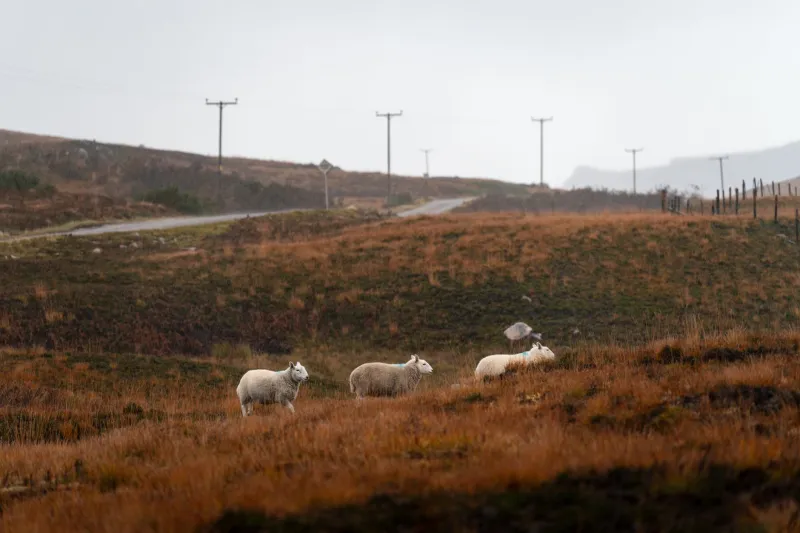
On a grey Tuesday morning in late October, Rob Tanner is already three fields deep into his day. His boots are caked in the kind of mud that doesn't wash off easily, his crook is tucked under one arm, and he's watching a small group of Exmoor Horn ewes work their way across a stretch of lowland heath like they've done it a thousand times before. Because they have. Or at least their ancestors have.
"People think sheep are just eating machines," he says, without turning round. "They don't understand what they're doing to this ground. What they're for."
Rob is 58, the third generation of his family to shepherd this particular corner of Somerset, and he is, by most measures, a man out of time. The heathland beneath his feet — a mosaic of purple moor grass, cross-leaved heath, and the occasional boggy flush that makes walking genuinely treacherous — is one of the most threatened habitats in the British Isles. And Rob's flock, it turns out, is one of the main reasons any of it still exists.
What Heathland Actually Needs
Lowland heath is a man-made habitat. That's the thing most people don't realise. It was created and maintained over centuries by grazing animals, particularly sheep, on land that would otherwise return to scrub and eventually woodland. Without regular, carefully managed grazing, the heather gets leggy and rank, the grassland closes over, and the specialist species — the dartford warblers, the silver-studded blue butterflies, the rare mosses and lichens — simply disappear.
"You pull the sheep off this ground and within ten years you've got bramble and birch scrub," says Dr Fiona Marsh, an ecologist with Natural England who has worked on Exmoor for over a decade. "The irony is that the very thing some people want to remove — grazing livestock — is what's been keeping these habitats open for thousands of years."
Fiona is careful with her words. She's caught between two camps that, in recent years, have grown increasingly hostile to each other. On one side: the rewilding movement, which advocates for removing grazing animals and allowing natural regeneration. On the other: traditional graziers like Rob, who argue that "natural" in this context is a fiction — that these landscapes are cultural artefacts as much as ecological ones, shaped by human hands and animal hooves in equal measure.
"I've got nothing against rewilding in the right place," Rob says later, over a mug of tea in the farmyard. "But this isn't the right place. This is heathland. It needs management. It needs us."
The Breed Matters
What makes Rob's operation distinctive isn't just that he's grazing heathland — it's how he's doing it. His flock is entirely Exmoor Horn, one of Britain's oldest native breeds, hardy enough to thrive on rough vegetation that would leave a commercial breed looking miserable within a fortnight. They're selective grazers, targeting the coarser grasses and leaving the heather largely intact, which is precisely what the habitat needs.
He also moves them in a pattern that mimics, loosely, the kind of transhumance that would have been common across this landscape centuries ago — shifting the flock between different areas of the heath across the seasons, giving each section time to recover.
"It's not complicated," he says. "But you have to know what you're looking at. You have to read the ground."
That knowledge — accumulated over decades, passed down through family and community — is exactly what worries people like Dr Marsh. "We're losing the shepherds faster than we're losing the heathland," she says plainly. "When Rob retires, who takes over? Who knows this ground the way he does?"
It's a question Rob himself has started asking. His two children have left farming. There are no obvious successors. And the economics of traditional heathland grazing — low stocking densities, specialist breeds, labour-intensive management — make it almost impossible to run as a straightforward commercial enterprise.
The Rewilding Fault Line
The tension between Rob and some of the rewilding advocates in the region has occasionally spilled into open conflict. A neighbouring estate, purchased three years ago by a conservation charity with rewilding ambitions, removed its grazing animals almost immediately. Rob has watched the vegetation change with something between anger and grief.
"There's a patch of heath over there that's been grazed since before my grandfather's time. It's going to scrub now. And everyone's applauding it like it's some great achievement."
The charity in question declined to comment for this article. But rewilding proponents generally argue that in many cases, natural regeneration produces greater biodiversity than managed grazing — and that the romantic attachment to traditional farming practices sometimes gets in the way of clear ecological thinking.
Fiona Marsh thinks the truth is messier than either side admits. "Both approaches have merit in different contexts. The problem is that it's become ideological. And when it gets ideological, the nuance disappears and the habitat suffers."
Something Worth Saving
On the way back across the heath, Rob stops to point out a patch of ground that, to the untrained eye, looks like nothing much — a low, slightly damp hollow between two rises. "Bog asphodel," he says. "And there — that's marsh gentian. You don't see that much anymore."
He knows the names of things the way some people know the names of old friends. And walking with him across this ground, it becomes hard to argue that what he's doing is anything other than conservation — just a version of it that doesn't come with a logo or a press release.
Natural England has recently begun working with Rob on a Higher Tier Countryside Stewardship agreement that should, in theory, make his operation financially viable for another decade. It's a start. But the deeper problem — the disappearance of the knowledge and the culture that makes this kind of stewardship possible — isn't solved by a payment scheme.
"I'm not asking for a medal," Rob says, as the ewes drift away across the heather. "I just want people to understand that this" — he gestures broadly at the landscape around him — "doesn't look after itself. It never did. That's the bit they keep getting wrong."
The wind picks up. The ewes keep moving. And the heathland, for now, keeps breathing.