Light Still Burning: The Passionate Few Keeping the West Country's Lighthouse Legacy Alive
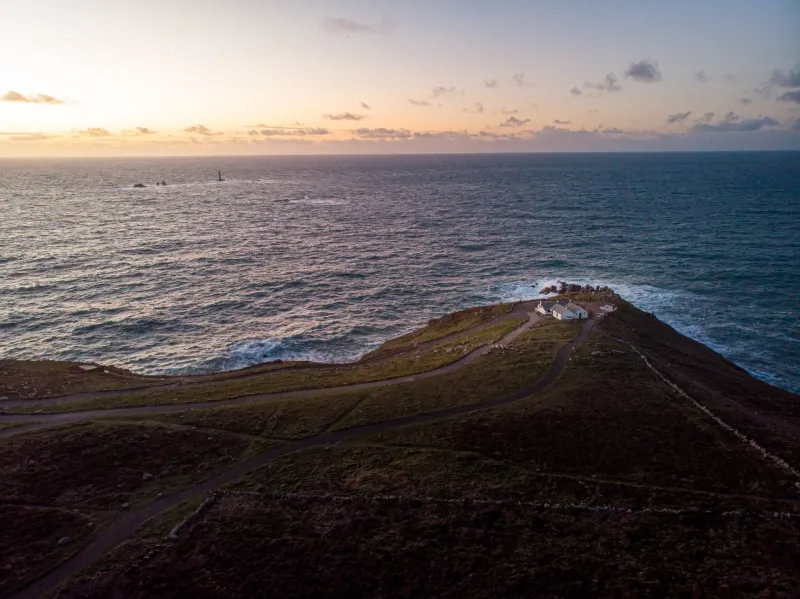
There's a particular kind of quiet that settles over a lighthouse at dusk. Not the empty silence of an abandoned building, but something older — a stillness that hums with memory. Storms weathered. Ships guided home. Lives, perhaps, quietly saved.
For the small but fiercely determined community of lighthouse enthusiasts, conservationists, and former keepers scattered across the West Country, that hum is worth fighting for. Because right now, these iconic towers face a future that's looking decidedly murky.
Switched Off, But Not Forgotten
Trinity House, the authority responsible for England's lighthouses since the reign of Henry VIII, completed the automation of its entire lighthouse network back in 1998. The last keeper formally signed off at North Foreland in Kent, and just like that, a profession that had endured for centuries quietly closed its books.
But automation didn't make the lighthouses redundant — it just made them lonely. Many towers across the West Country now operate without a single human soul in residence, their lights cycling on and off via timer and sensor, their keepers' cottages standing empty or converted for holiday lets. The light functions. The story, however, risks going dark.
"People assume because the light's still working, everything's fine," says Margaret Trevaskis, a retired schoolteacher from Falmouth who volunteers with a local preservation trust focused on the Lizard Peninsula's coastal heritage. "But a lighthouse is more than its beam. It's a building, a history, a community landmark. And some of them are in a right state."
Margaret isn't exaggerating. Several of the West Country's smaller lighthouse structures — not all of them under Trinity House's direct care — have suffered from neglect, coastal erosion, and the particular cruelty of salt air on Victorian stonework. Fundraising campaigns, planning battles, and endless committee meetings have become the new rhythm of those who care.
The Keeper Who Never Really Left
Robert Nancarrow spent eleven years as an assistant keeper at a lighthouse on the north Cornish coast before automation made his role obsolete. He's in his late seventies now, living in a terraced house in Padstow, but he still drives out to the headland a couple of times a week — just to look.
"Old habit," he says with a grin that doesn't entirely conceal the sentiment behind it. "When you've spent that long watching over something, you don't just stop caring about it."
Robert's days in the lamp room were governed by a strict four-hours-on, four-hours-off watch rotation, a routine that shaped everything from his sleeping patterns to his relationship with the tides. He learned to read the sea the way other people read books — its moods, its warnings, its occasional treachery.
"We had a coaster come in far too close one February," he recalls, leaning back in his chair. "Visibility was rotten. The skipper told me afterwards that our light was the only thing he'd been able to pick out. That's what it was all about. That's what it still should be about — not just the automated beam, but someone actually being there."
His frustration isn't with technology for its own sake. It's with what he sees as a gradual erosion of institutional memory — the accumulated knowledge of sea conditions, local hazards, and community relationships that keepers carried in their heads and passed between generations.
Communities Taking the Helm
Across Devon and Cornwall particularly, community groups have stepped in where official bodies have pulled back. The model varies — some trusts lease lighthouse cottages and run them as heritage accommodation, ploughing proceeds back into structural maintenance. Others focus on public access, opening towers to visitors during summer months and running educational programmes for school groups.
In Somerset, a small volunteer collective has been lobbying for improved heritage status for a pair of coastal light structures near the Bristol Channel that currently sit in a planning grey area. Their campaign has attracted support from local councillors and, perhaps more usefully, a couple of well-known West Country artists whose association has lent the cause a welcome bit of visibility.
"The public loves lighthouses," says campaign organiser Priya Okafor, who moved to the area from Bristol three years ago and found herself drawn into the effort almost immediately. "You put a lighthouse on a poster, on a postcard, on a tea towel — people respond to it. There's something deeply embedded in the British imagination about what these buildings represent. We're trying to harness that affection and turn it into something practical."
Practical means grants applied for, stonework repointed, interpretation boards installed, and — crucially — access routes made safe enough for the general public to actually visit. It means working with landowners, local councils, and heritage bodies in the kind of slow, occasionally maddening collaboration that characterises most genuine community conservation work.
What's Really at Stake
Beyond sentiment, there's a substantive argument about maritime heritage and coastal identity. The West Country's relationship with the sea is foundational — economically, culturally, historically. Fishing communities, trading ports, the Royal Navy, smugglers, lifeboatmen: the coast has shaped this region in ways that continue to resonate in everything from dialect to diet.
Lighthouses sit at the centre of that story. They're the physical embodiment of the pact between land and sea — a promise, made in stone and light, that the shore would do what it could to keep sailors safe. Letting them crumble, or reducing them to purely functional infrastructure with no human connection whatsoever, feels to many like a severing of something important.
"My grandfather fished out of Newlyn for forty years," says Margaret Trevaskis. "He knew every lighthouse on this stretch of coast by name, by character almost. They weren't just navigation aids to him — they were landmarks in every sense. Part of how he understood where he was in the world."
That understanding is what the current generation of campaigners is trying to preserve. Not in amber, not as a theme-park version of maritime nostalgia, but as living, accessible heritage — places where the connection between past and present remains tangible.
The Light Goes On
Robert Nancarrow still makes his twice-weekly pilgrimage to the headland. The lighthouse he once tended looks, from a distance, much as it always did — white tower, red band, the lamp room glinting in the afternoon sun. Up close, he'll tell you, you can see where the render needs attention, where the salt has done its work on the window frames.
But the light still turns. And for now, that's enough to keep him coming back.
"As long as it's there," he says quietly, "there's something worth fighting for."
For the communities, campaigners, and former keepers scattered across the West Country's coastline, that's not just a sentiment. It's a strategy.