Roots, Orchards and Rough Cider: Meet the Somerset Family Who've Been at It Since Napoleon Was Causing Bother
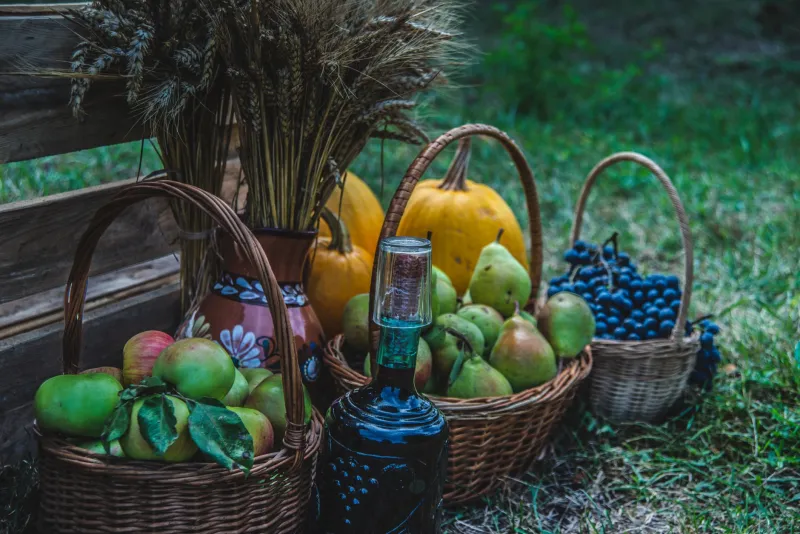
There's a particular kind of quiet that settles over an old Somerset orchard in early autumn. The kind that feels earned. Gnarled apple trees, their branches heavy and bowing like elderly relatives at a wedding, line the sloping field behind a farmhouse that has seen more history than most local museums. This is Hatchwell's — and if you've ever sipped a pint of proper West Country cider, the kind that makes your eyes water slightly and your shoulders drop about three inches, you'll understand why places like this matter.
Roger Hatchwell, 67, has the hands of a man who has spent decades doing useful things with them. Calloused, stained faintly amber at the knuckles, he wraps them around a chipped mug of tea and nods towards the press house — a low stone building that smells magnificently of fermentation and old wood.
"My great-great-great-grandfather started this," he says, without particular fanfare. "Around 1823, give or take. He didn't call it a business. It was just what you did."
Two Centuries in the Making
The Hatchwells have been making cider on this same patch of land outside Taunton for the better part of two hundred years. The original orchard — or what remains of it — still produces fruit. Some of those trees are over a century old themselves, varieties with names like Dabinett, Kingston Black, and Yarlington Mill that most supermarket shoppers have never heard of and couldn't pick out of a line-up.
Cider in the West Country isn't a trend. It isn't a lifestyle choice or a craft movement or something that arrived with a logo and a tap room. It's infrastructure. It's culture. It's, as Roger puts it, "just the drink."
For much of the nineteenth and early twentieth centuries, farm workers across Somerset and Devon received part of their wages in cider — a practice called "truck" that was only formally abolished in 1887, though it quietly persisted in some corners well beyond that. The Hatchwells supplied farms across the Vale of Taunton Deane, filling barrels and delivering them by horse and cart, then by tractor, then eventually by a battered Transit van that Roger still uses today.
"My grandfather used to say the cider held the harvest together," Roger's daughter Ellie, 38, tells me. She's the one most likely to take over the operation, though she's careful not to phrase it that way in front of her dad. "Not just as a drink. As a reason for people to keep showing up."
Surviving the Squeeze
The twentieth century was not kind to small cider makers. The post-war decades brought industrialisation, and with it the rise of brands like Bulmers and Taunton Cider Company, which could produce millions of litres and undercut smaller operations on price without breaking a sweat. Supermarkets, when they arrived in force during the seventies and eighties, wanted consistency, volume, and shelf-stable products. What they didn't particularly want was a 200-litre batch of farmhouse cider that tasted slightly different every year depending on the summer.
"We lost a lot of pubs," Roger says simply. "They'd been buying from us for decades. Then suddenly they could get a keg delivered cheaper from somewhere in Herefordshire and they didn't have to worry about it."
Many Somerset cider farms didn't survive that squeeze. Some sold their orchards to developers. Others converted to apple juice or gave up growing altogether. The Hatchwells stayed, partly through stubbornness, partly through a loyal local customer base, and partly — Roger admits with a grin — because they owned the land outright and had no mortgage to worry about.
"Being skint but debt-free is its own kind of freedom," he says.
The Craft Revival and Its Complications
The last fifteen years or so have brought something of a reversal. The craft drinks movement, for all its Instagram aesthetics and slightly exhausting vocabulary, has done genuine good for small producers. Consumers — particularly younger ones — have become increasingly interested in provenance, in knowing where things come from and who made them. Farmers' markets, independent bottle shops, and farm-to-table restaurants have opened new doors.
Ellie was the one who pushed the family to engage with this shift. She set up a simple website, started selling directly to customers online, and began offering orchard tours during harvest season. Last year, they welcomed over three hundred visitors to the farm.
"Dad thought I was mad," she laughs. "He said, 'People don't want to come and watch us press apples.' And I said, 'Dad, people absolutely want to come and watch us press apples.'"
She was right. The tours have become one of their most reliable revenue streams, and the direct-to-consumer sales mean they're no longer entirely dependent on wholesale accounts that can disappear overnight.
But Ellie is clear-eyed about the limits of the revival. "Craft cider is fashionable right now. That's brilliant for us. But fashions change. What we're trying to do is build something that doesn't depend on being fashionable."
What's Actually in the Glass
Walking through the press house, Roger explains the process with the ease of someone who has done it so many times it lives in his muscles rather than his memory. The apples — a blend of bittersweet and bittersharp varieties — are milled into a pulp called pomace, then layered between hessian cloths in a process called "building the cheese." The press, a beautifully archaic piece of hydraulic machinery, squeezes the juice out slowly. Fermentation happens naturally, driven by wild yeasts on the apple skins, in old oak barrels that have absorbed decades of previous harvests.
There are no additives. No concentrates. No back-sweetening with industrial glucose. The result is a cider that tastes like something — tart, complex, occasionally a bit funky in the best possible way — rather than the fizzy, uniform sweetness that dominates supermarket shelves.
"Ours isn't for everyone," Roger says, with the quiet confidence of someone entirely unbothered by that fact. "It's not supposed to be."
Passing It On
The question of succession hangs over every family business, but it sits differently here. Ellie has two children of her own, both still at primary school. Whether they'll want to spend their lives pressing apples in Somerset is anyone's guess.
"I don't think you can force it," Ellie says. "My dad never forced it on me. I just grew up here and it got into me. Either it does or it doesn't."
Roger is less philosophical about it. "I'd like to think there'll be Hatchwells making cider here in another hundred years," he says. "But I'm not going to lie awake worrying about it. The orchard will still be here. The press will still be here. Someone will figure it out."
Outside, the afternoon light is turning golden across the Vale of Taunton Deane, and the trees are doing what they've always done — quietly, stubbornly producing fruit. Two hundred years of it. Whatever comes next, that's not nothing.
Hatchwell's Cider is available at selected farm shops and independent retailers across Somerset and Devon, as well as direct from the farm. Orchard tours run September to October — details on their website.