Dusty Shelves, Sacred Pages: The Woman Saving West Country Church Libraries Before Time Runs Out
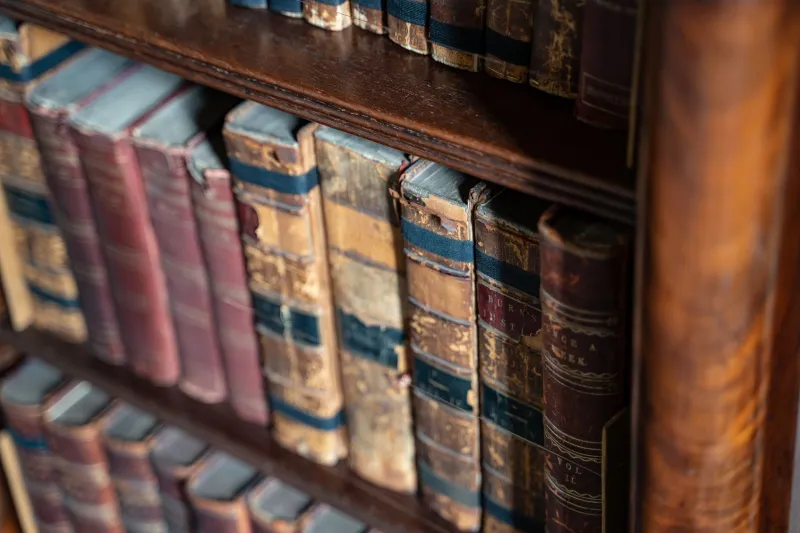
The vestry smells of damp hymn books and something older — something that sits at the back of your throat and refuses to leave. Margaret Holt doesn't mind. She's been breathing in rooms like this for the better part of four years, and she's learned to read a space the way other people read a face. The slight bow of a shelf. The way a leather binding has gone the colour of old tea. The particular silence that settles over a collection nobody has touched in living memory.
"Most people walk past these rooms without a second thought," she says, carefully lifting a folio from a shelf in a small Devon parish church that asked not to be named while cataloguing is ongoing. "But every single one of these books was put here deliberately, by somebody who thought it mattered. That doesn't just stop mattering because we've got the internet."
Margaret spent thirty-one years as a librarian in Taunton, retiring in 2020 — timing that, she admits with a dry laugh, left her with rather a lot of unexpected time at home. What started as a casual visit to her own village church in Somerset, curious about a wooden cabinet she'd never noticed before, has since grown into a full-scale preservation project covering churches across Somerset, Devon, Dorset, and Cornwall.
What's Actually in There
The short answer is: more than almost anyone expected.
West Country parish churches, it turns out, accumulated books for centuries — and not just Bibles and prayer books. Many benefited from the donations of local clergy, landowners, and travelling scholars who left their personal collections to the parish on their deaths. Some churches received endowments specifically to maintain small lending libraries for parishioners. Others simply accumulated books the way old buildings accumulate everything: gradually, without anyone really noticing.
What Margaret has found ranges from the mundane to the quietly extraordinary. Theological commentaries from the 1700s sit alongside Victorian-era local histories. A church in mid-Devon yielded a near-complete set of sermons printed in Exeter in the 1680s. A Cornish parish produced a hand-annotated copy of a natural history text from the early 1800s, the margins dense with observations written in a hand she hasn't yet identified. One Somerset church had, improbably, a collection of agricultural pamphlets from the 1840s tucked in behind the vestments cupboard.
"Nobody put them there as a joke," she says. "Somebody thought that was exactly where they should go. There's a logic to all of it, even when it's not immediately obvious."
The Race Against Decay
The problem isn't simply that these books have been forgotten. It's that forgetting has consequences. Without climate control, without acid-free storage, without anyone to notice when a roof begins to let in moisture, collections that survived three centuries can deteriorate within a generation.
Margaret has found books warped beyond legibility by damp. Bindings consumed by mould. Pages so brittle they crumble at the corner when turned. In a few cases, she's arrived at a church only to be told that boxes of old books were cleared out years ago — taken to a skip, or sold at a fete for twenty pence apiece.
"That's the thing that keeps me going," she admits. "Not the beautiful discoveries, though those are wonderful. It's the knowledge that every week I don't get to a church is another week something might be lost permanently. There's no recovering from that."
She works with a small network of volunteers — mostly retired teachers, local historians, and a handful of younger archivists she's connected with through the Devon and Somerset record offices. Together they photograph, describe, and where possible digitise the collections they find, feeding the results into a shared database she's built herself with help from her grandson.
The digitisation side of things is, she concedes, still in its early stages. High-quality scanning equipment is expensive. Volunteers with the right skills are scarce. Funding — from grants, local trusts, and occasional donations — comes in fits and starts. But the database is growing, and she's already had researchers from three universities make contact after stumbling across entries online.
More Than Old Books
There's a deeper argument running underneath Margaret's project, one she articulates carefully, as if she's turned it over many times in her head.
These libraries, she believes, aren't just collections of old books. They're physical evidence of how communities thought about knowledge, faith, and self-improvement across the centuries. The choices made about what to acquire, what to keep, what to annotate — these are clues to the intellectual and spiritual life of places that rarely made it into formal historical records.
"A small parish in rural Somerset in 1750 wasn't just farming and churchgoing," she says. "People were reading, debating, disagreeing. They were engaging with ideas. And the books they left behind in these churches are some of the only evidence we have of that. Once they're gone, that whole dimension of local life just disappears."
She's also struck by what the collections reveal about regional identity — the particular texture of West Country faith and learning, distinct from what you'd find in a London parish or a northern mill town. Local authors appear repeatedly. Local events are referenced in marginal notes. There's a sense, she says, of a community in conversation with itself across time.
The Churches Themselves
Not every church has been welcoming. A few incumbents have been wary of outside involvement, uncertain about what cataloguing might lead to — questions of ownership, perhaps, or the prospect of collections being moved elsewhere. Margaret is careful to reassure them. Her goal is preservation in place wherever possible, with digitisation ensuring wider access without removing anything from its original home.
Most, though, have been not just welcoming but relieved. "Several vicars have said to me, 'I knew something needed to be done and I simply didn't know where to start,'" she says. "They're grateful someone's taken it on. So am I, honestly. It suits me."
She's currently working through a list of around forty churches she hasn't yet visited, with more being added as word spreads through local heritage networks. She estimates — conservatively — that she has another three or four years of work ahead of her before the project reaches anything like completion.
She doesn't seem remotely daunted by that.
"I retired into a pandemic with nothing to do," she says, sliding the Devon folio carefully back onto its shelf. "Now I've got more purpose than I've had in years. These books waited this long. I can keep going a bit longer too."