Electric Cars: Are They Really Saving the Planet or Just Saving Face?
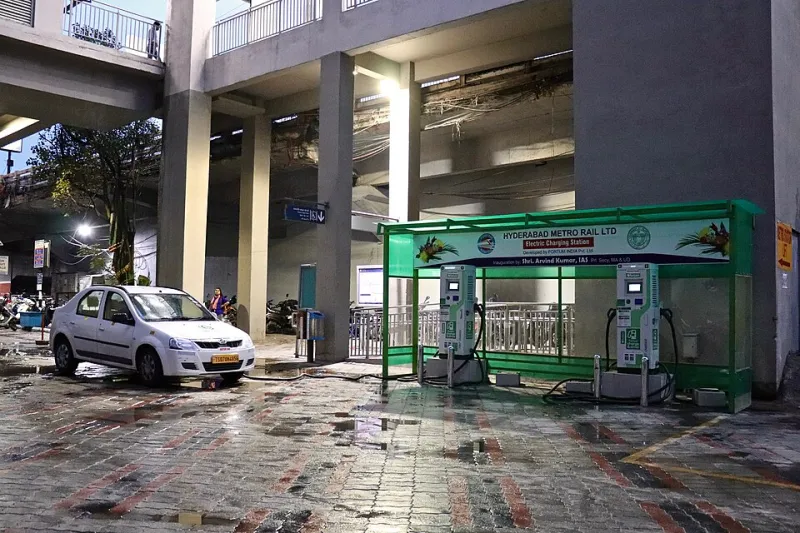
Photo: iMahesh, CC BY-SA 4.0, via Wikimedia Commons
The government says go electric, the adverts make it look effortless, and your neighbour just got a shiny new EV on the driveway. But out here in the West Country, where charging points are rarer than a warm January and the nearest motorway services is a forty-minute drive, the gap between the sales pitch and lived reality is hard to ignore.
We're told the transition to electric vehicles is well underway. The 2030 ban on new petrol and diesel car sales (now nudged to 2035, depending on which politician is speaking this week) is supposedly driving us towards a cleaner, greener future. And in theory, that all sounds wonderful. In practice, ask someone in rural Somerset or mid-Cornwall what they think, and you'll get a rather more complicated answer.
The Charging Problem Nobody Wants to Talk About Honestly
Let's start with the basics. To make an electric car work for your daily life, you ideally need a home charger. That means off-street parking — a driveway, a garage, somewhere you can run a cable without it becoming a trip hazard across a public pavement. In cities, this is already a headache. In older West Country market towns, where terraced cottages open directly onto narrow streets, it's frequently impossible.
Jamie Penrose, who runs a small landscaping business outside Okehampton in Devon, put it bluntly when we spoke to him last month. "I rent a place with no driveway. The nearest public charger is eight miles away, and the last time I tried to use it, it was broken. I'd love to go electric — I really would — but the infrastructure just isn't there for people like me."
Jamie's situation is far from unusual. According to Zap-Map, a UK charging network tracker, the South West has some of the lowest public charger density per capita in England. The big motorway corridors get the investment; the back lanes of Dartmoor and the Lizard Peninsula do not.
What the Adverts Don't Show You
EV marketing is, it has to be said, a masterclass in selective storytelling. Gleaming cars gliding silently through empty countryside roads. Couples smiling as they plug in overnight. Morning arrivals at the office, fresh and guilt-free. What you don't see is the family who drove three junctions down the M5 on Christmas Eve only to find every charger at the services occupied, or the farmer in West Dorset who needs a vehicle that can tow a trailer through a muddy field in February and still get home on a single charge.
Range anxiety — the nagging fear that your battery won't last the journey — is real, and it disproportionately affects people in rural areas who cover more miles per trip and have fewer fallback options. The average EV range has improved considerably, yes. But "improved considerably" and "good enough for everyone" are not the same thing.
The Environmental Equation Is More Complex Than You'd Think
Here's where it gets genuinely interesting, and a bit uncomfortable for the most zealous EV evangelists. Electric cars are, over their lifetime, significantly lower in carbon emissions than petrol or diesel equivalents — provided the electricity powering them comes from a reasonably clean grid. The UK grid is getting cleaner every year, with renewables now accounting for a growing share of generation, so that's genuinely good news.
But the manufacturing process for EVs, particularly the mining of lithium, cobalt, and manganese for batteries, carries a substantial environmental cost. Much of that mining happens in parts of the world with weak environmental regulation and serious human rights concerns. The carbon debt from producing a new EV is real, and it takes years of cleaner driving to pay it back.
The honest answer, then, is that EVs are better — but not magic. Keeping your existing car going longer, reducing how much you drive, and using public transport where it actually exists are all more impactful choices than simply swapping one new car for another new car with a different engine.
The Cost Barrier Is Still Enormous
The average price of a new electric car in the UK sits somewhere north of £35,000. Government grants have been scaled back repeatedly. Second-hand EVs are becoming more available, but battery degradation and uncertainty about replacement costs put many buyers off. For a lot of West Country families managing on ordinary incomes, going electric simply isn't a realistic option right now — and being lectured about it by politicians who claim expenses on ministerial cars doesn't help.
There's a class dimension to this conversation that rarely gets acknowledged in the breathless coverage of EV uptake figures. The people buying electric cars right now are, by and large, people who can afford to. That's not a criticism of them — it's an observation about a policy framework that has consistently prioritised early adopters over structural change.
So What's the Actual Path Forward?
None of this means the transition to electric vehicles is wrong-headed. It isn't. Combustion engines are a significant source of harmful emissions, and moving away from them matters. But the rhetoric that surrounds EVs — the sense that we're already basically there, that it's all going swimmingly, that anyone who raises questions is a climate denier or a Luddite — doesn't serve anyone well.
What would actually help people in the West Country and beyond? A serious, funded rollout of public charging infrastructure in rural areas. Continued investment in affordable second-hand EV markets. Realistic honesty from government about the timeline and the genuine barriers. And perhaps, just perhaps, a bit more attention to the public transport networks that have been quietly hollowing out across the region for a decade, leaving people with no practical alternative to car ownership in the first place.
The future might well be electric. But getting there honestly, fairly, and in a way that works for a bloke in Okehampton with no driveway and eight miles to the nearest charger — that's the bit we still need to figure out.