Grease, Ghosts and Glory: The Somerset Man Breathing Life Back into Forgotten Machines
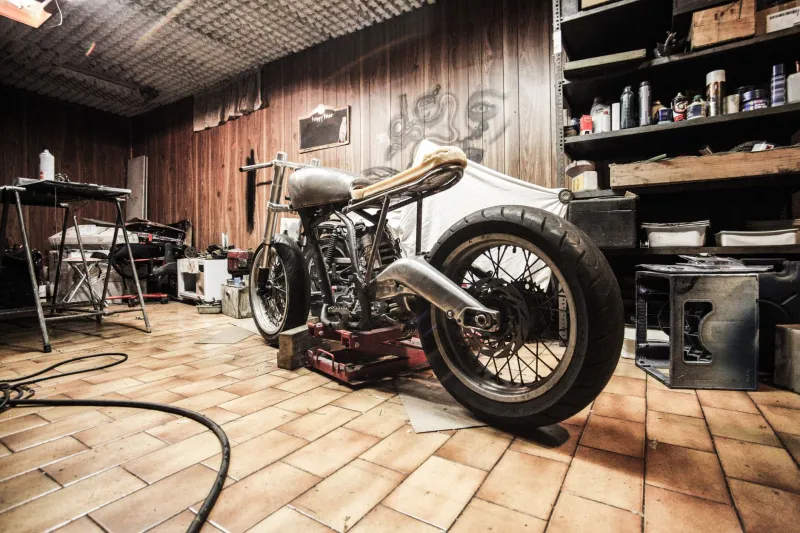
The barn sits at the end of a rutted track outside Shepton Mallet, half-hidden behind a hedgerow that's been getting ideas above its station for at least a decade. From the road, you'd never know it was there. Which is, Ray Calloway will tell you with a grin, rather the point.
Inside, it's a different world entirely. Motorcycles in various states of undress hang from hooks and lean against wooden beams. A pre-war Austin Seven squats under a tarpaulin in the corner. Shelves groan under the weight of carburettors, magnetos, chrome headlamps and enough miscellaneous engine parts to confuse a museum curator. The place smells — gloriously, overwhelmingly — of engine oil, damp straw and something that might charitably be called history.
Ray, 58, has been at this for nearly thirty years. A former agricultural mechanic with hands like shovels and a memory for engine specifications that borders on the unsettling, he started rescuing abandoned vehicles almost by accident.
"Bloke down the road died, left a 1955 BSA Gold Star in a hedgerow," he says, wiping his hands on a rag that probably needs its own restoration at this point. "His family didn't want it. Council were going to scrap it. I just couldn't bear to see it go."
He didn't. He brought it home, stripped it down on his kitchen table — much to his then-wife's considerable displeasure — and spent eight months bringing it back to running condition. Word got around. It always does in Somerset.
The Machines That Find Him
These days, Ray doesn't go looking for projects. They come to him. A tip-off from a farmer who found a 1960s Triumph Bonneville buried under hay bales. A phone call from a solicitor dealing with a deceased estate and a garage full of puzzles. A teenager who spotted a Norton Commando rusting in a field and tracked Ray down through three layers of local gossip.
"I've never advertised," he says. "Never needed to. Somerset's good at looking after its own."
Not everything he takes in is mechanically salvageable. Some arrive too far gone — seized engines, frames cracked beyond repair, bodywork dissolved entirely by decades of damp. But Ray keeps them anyway, cataloguing parts that might one day save something else. Nothing gets thrown away. The barn has its own internal logic, impenetrable to visitors but apparently crystal clear to its custodian.
What drives him isn't just the mechanics, though he clearly loves that too. It's the detective work. Every machine that comes through the barn doors carries a story, and Ray considers it something close to a duty to find out what that story is.
Following the Thread
Take the 1948 Velocette LE that arrived two winters ago, dragged out of a flooded outbuilding near Wells. The registration document was long gone, but Ray traced the engine number through the Velocette Owners Club, which led him to a dealer's records in Bristol, which eventually led him to the original owner — a district nurse who'd ridden it on her rounds across the Somerset Levels until 1961, when a collision with a wandering bullock ended her motorcycling days for good.
"Her granddaughter lives in Glastonbury," Ray says. "I rang her up out of the blue. She cried on the phone for about ten minutes." He pauses. "I might have as well, a bit."
The Velocette now runs. Not perfectly — Ray is honest about that — but it runs. The granddaughter came to see it last spring, stood in this same barn, and watched it start on the second kick. Ray says he doesn't have a better memory from the past decade.
This is the bit that separates what he does from simple mechanical hobbyism. The restoration is the means; the reconnection is the point. He's traced previous owners to addresses across the West Country and beyond, uncovered stories of wartime service, youthful adventure, accidents and heartbreak. One 1930s motorcycle turned out to have been ridden by a man who'd competed in the pre-war Isle of Man TT. Another had a name scratched inside the headlamp casing — a woman's name, never explained, never explained away.
The Work Itself
Ray is not precious about technique. He'll use modern parts where originals are genuinely unobtainable, though he'd rather spend six months hunting down the right component than fit something that doesn't belong. He has a network of fellow obsessives — in Devon, in Wiltshire, in a workshop outside Taunton run by a retired postman who specialises in pre-war electrics — and between them they can usually find what's needed.
"The internet's been brilliant, actually," he admits, with the slight guilt of a man who spent years insisting he didn't need it. "You can find parts now that would've taken years to track down in the old days. Doesn't make the work any quicker, mind."
He estimates he completes four or five full restorations a year. Some are sold — he has to keep the lights on, and parts aren't cheap — but a handful stay. The BSA that started it all is still here, gleaming under a single bare bulb, ridden occasionally to rallies and more often just around the lanes when Ray needs to clear his head.
What It's Really About
Ask Ray why he does it and he'll give you a practical answer first. Keeps him busy. Keeps him off the sofa. Good for the brain. All true, probably. But push a bit further and something else comes through.
"These things were made by people," he says, turning a chrome lever over in his palm. "Ridden by people. They've got lives in them, proper lives. Chucking them on a scrap heap feels like... I don't know. Like forgetting someone on purpose."
Outside, the Somerset afternoon is doing its usual thing — indeterminate cloud, a smell of rain coming, rooks making a racket in the elms. Inside the barn, a half-stripped 1967 Royal Enfield Bullet waits on the workbench. Ray found it in a ditch near Bruton. He's already started making calls.
Somewhere out there, it has a history. He intends to find it.