Pull the Rope, Mind the Ceiling: Inside Dorset's Last Stand for the Ancient Art of Change Ringing
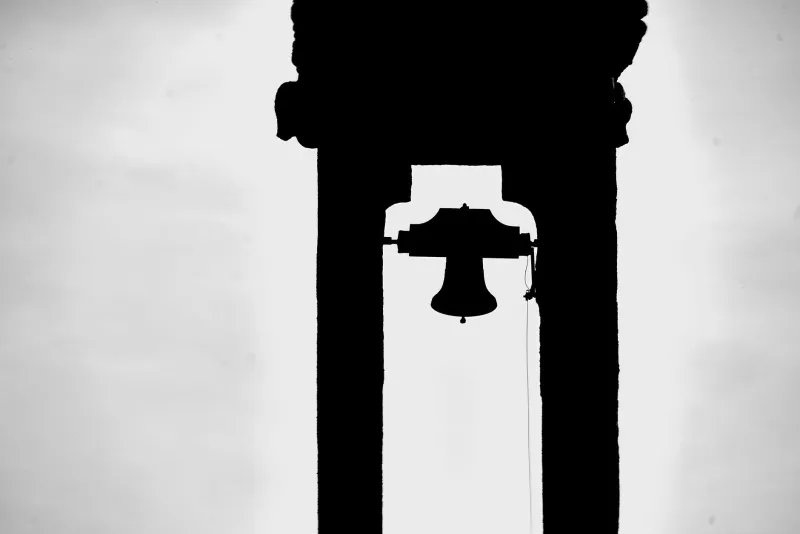
The first thing you notice is the smell. Old rope, cold stone, and something else — centuries of accumulated effort, maybe — that hits you the moment you step through the low wooden door at the base of the tower. Then the noise starts, and everything else disappears.
It's a Tuesday evening at a parish church somewhere between Blandford Forum and Sturminster Newton, and seven people of wildly varying ages are doing something that looks, from the outside, completely chaotic. Ropes drop and rise in a loose rhythm. Bodies sway. Someone mutters a number sequence under their breath. And above it all, just audible through the thick stone floor overhead, the bells begin to speak.
Standing at the centre of it — watching, correcting, occasionally grinning — is Margaret Hollis, 61, who has been ringing bells in Dorset for nearly four decades and shows absolutely no signs of stopping.
"People think it's just pulling a rope," she says, during a brief pause in the session. "And I understand why. But what we're actually doing is mathematics. Living, breathing, moving mathematics. And once it gets into you, it never really leaves."
What Change Ringing Actually Is
For the uninitiated — and that's most of us, honestly — change ringing is the practice of ringing a set of tuned bells in a series of constantly shifting sequences, known as "changes." Unlike a carillon, where a single player picks out a melody, change ringing is a collaborative, combinatorial exercise. No bell ever rings in the same position twice in a row. The ringers must memorise complex patterns, respond to each other in real time, and keep perfect timing — all while managing a heavy, swinging bell on the end of a rope that could quite easily knock you sideways if you lose concentration.
It is, in short, considerably harder than it looks.
The tradition stretches back to the early seventeenth century, when English church towers first began to be fitted with bells mounted on full wheels, allowing them to swing through a complete rotation. The West Country was at the heart of that early flowering, and Dorset's towers still carry bells that have been rung — with varying degrees of enthusiasm — across the centuries since.
"The Towers Are Still There. The People Are the Problem."
Margaret doesn't sugarcoat the situation. Across England, the number of active bell-ringers has been declining steadily for years. The Central Council of Church Bell Ringers estimates that something in the region of 40,000 people ring regularly — a figure that sounds reasonable until you realise it needs to be spread across more than 5,000 rings of bells, with a minimum of five or six ringers needed just to make a basic peal work.
In rural Dorset, the arithmetic gets uncomfortable quickly. Some towers have managed to keep a core group going through sheer stubbornness. Others ring only for weddings now, dependent on a travelling band drafted in from elsewhere. And a few have gone quiet altogether.
"The towers are still there," Margaret says, with a pragmatism that's clearly been hard-won. "The bells are still there. The ropes are still there. The people are the problem."
She's spent the last decade doing something about it. As the ringing master for her local association, she runs regular learner sessions, visits schools when she can get a hearing, and has developed what she calls a "gentle ambush" strategy — getting people up into a tower for a look before they've fully committed to anything.
"Once they're up there and they've had a go, the conversion rate is actually quite good," she laughs. "It's getting them through the door in the first place."
The Competition From Everything Else
It would be too easy to blame smartphones, but Margaret is honest enough to name them anyway. The average age of a church bell-ringer in England is somewhere north of fifty, and persuading younger people to commit to a weekly practice session — at a time when every possible leisure activity is competing for the same shrinking pool of free evenings — is a genuine challenge.
But she's also careful not to be sniffy about it. "These kids have got a lot going on. I'm not going to stand here and pretend that bell-ringing is inherently more worthy than anything else they might be doing. What I can tell you is that it's social, it's physical, it's genuinely mentally demanding, and you're part of something that connects you to hundreds of years of the same thing happening in the same place. That's not nothing."
There's also, she points out, the small matter of the sound itself. Church bells are one of the few things that still cut through the ambient noise of modern life in a way that feels genuinely ancient. They mark time. They announce things. They carry across fields and valleys in a way that no digital notification ever quite manages.
"When you hear a full peal going off across open countryside," she says, "something happens to you. Even if you can't name it."
Learning the Ropes — Literally
Back in the ringing chamber, a teenager named Callum is being talked through his second-ever attempt at handling a bell solo. He's sixteen, came along because his grandfather is one of the regulars, and is currently wearing the expression of someone trying to simultaneously solve a maths problem and not fall over.
"Catch it earlier," Margaret says, calm and precise. "Let it do the work. You're fighting it."
Callum adjusts. The bell settles. His face changes entirely.
"There," she says. "That's it. That's the feeling."
It's a small moment, but it carries the whole argument for why any of this matters. Somewhere in that flint tower, in the gap between a sixteen-year-old and a tradition that predates the Civil War, something is being passed on. Not a museum piece. Not a performance. Something live.
What Happens If the Ropes Go Slack
The practical consequences of a tower falling silent are more significant than most people realise. Bells that aren't rung regularly deteriorate. Fittings seize. Ropes rot. And once a ringing tradition in a particular parish dies out, reviving it takes money, expertise, and a critical mass of willing people that can be very hard to assemble from scratch.
Margaret has seen it happen. She's also seen it reversed, though it takes years and usually one or two individuals with an almost unreasonable amount of patience.
"It's always people," she says. "Every single time, it comes down to one or two people who just refuse to let it go."
She says it without any apparent awareness that she is, herself, one of those people. The rest of the room notices, though. Callum's grandfather catches someone's eye across the chamber and nods slightly, as if confirming something.
Outside, over the darkening Dorset fields, the bells ring on.