Before the Last Speaker Goes: One Woman's Race to Bottle the Sound of the West Country
There's a word used in parts of Somerset — dimpsey — that describes the particular quality of twilight just before the light gives up entirely. Not quite dusk, not quite dark. A liminal, in-between thing. It's a word that doesn't translate well, doesn't survive transplanting, and according to linguist and oral historian Miriam Trescothick, it's exactly the kind of word that could vanish within a generation.
"When the last person who uses a word naturally stops using it, that's it," she says, sitting at a cluttered desk in the Exeter University archive room she's made her unofficial headquarters. "You can write it in a dictionary. You can put it on a heritage sign. But the living thing — the way it sits in the mouth, the rhythm of it — that's gone."
Miriam has spent the better part of fifteen years trying to stop that from happening. What started as a PhD project tracking vowel shifts across the South West has quietly evolved into something far more urgent: a full-scale digitisation effort to capture, catalogue, and preserve audio recordings, written transcripts, and contextual notes documenting the dialects of Devon, Cornwall, Somerset, and Dorset before their most fluent speakers are no longer around to share them.
What's Already Gone
The losses, she's quick to point out, aren't hypothetical. Whole clusters of agricultural vocabulary — the specific terms for stages of haymaking, the names for different types of field drainage, the calls used between farmers working opposite ends of a slope — have already effectively disappeared from living speech. They exist in nineteenth-century glossaries and in the occasional memoir, but nobody's saying them out loud anymore.
"Cornish dialect had its own complete lexicon for fishing," she explains, pulling out a battered notebook covered in phonetic script. "Not just the names of fish, but the vocabulary around reading weather, reading water, the social rituals of the harbour. A lot of that is fragmentary now. We have it written down in places, but writing doesn't tell you where the stress falls, or how it changes when someone's angry, or tired, or talking to a child."
The regional accents themselves are shifting too — and faster than most people realise. Research consistently shows that younger speakers in urban centres like Bristol, Plymouth, and Exeter are converging toward a more generalised southern English sound, shaped by media, migration, and the slow erosion of the kind of tight-knit rural communities where dialect used to pass naturally from one generation to the next.
The Archive Itself
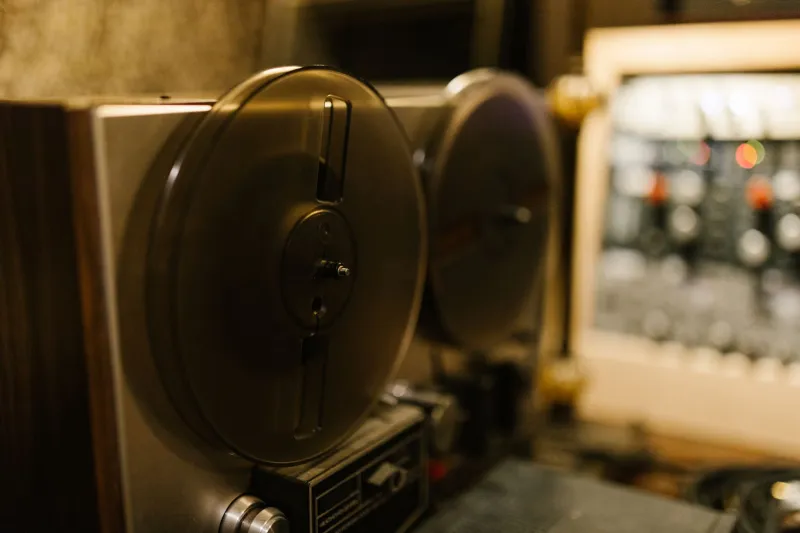
The collection Miriam is building — officially called the South West Voices Project, though she tends to just call it "the archive" — currently holds just over 1,400 hours of recorded material. Some of it dates back to reel-to-reel recordings made by folklorists in the 1960s and 70s, transferred painstakingly to digital formats before the tapes degraded beyond recovery. Some of it she's recorded herself, driving out to villages in North Devon and the Blackdown Hills with a portable microphone and a flask of tea.
The oldest material is extraordinary. There are recordings of speakers born in the 1880s, their voices crackled and distant but unmistakably, gloriously specific — a Dorset shepherd discussing lambing in an accent so thick it takes two or three listens to fully parse, a Cornwall woman singing a working song with vowels that have no modern equivalent.
"That's the stuff that keeps me going," Miriam says. "When you hear a voice like that, you understand what's at stake. It's not just linguistics. It's a whole way of being in a place."
The newer recordings are more conversational — structured interviews, yes, but also informal chats, storytelling sessions, even arguments (with permission, naturally). She's particularly interested in capturing dialect in context, not just the vocabulary but the cadence, the idiom, the way West Country speech moves differently depending on whether you're gossiping, complaining, or telling a joke.
The Technology Helping Out
If the crisis is modern, so are some of the solutions. Miriam has been working with a small team of computational linguists to build a searchable, tagged database that will eventually allow researchers — and, crucially, the general public — to browse recordings by region, topic, speaker age, and linguistic feature. A clip of a Dartmoor farmer using a particular construction will sit alongside related examples, annotations, and phonetic breakdowns.
AI tools, she admits cautiously, have also started to play a role — not in replacing human judgement, but in transcribing recordings at speed so that the team can focus on the interpretive work. "It's not perfect," she says with a laugh. "It has absolutely no idea what to do with a strong Cornish accent. But it's getting better, and it frees us up."
There are plans, too, for a public-facing element — a kind of interactive map of West Country dialect, where you can click on a village and hear what it sounded like to grow up there in 1955. Schools have already expressed interest. Local councils have been — in the diplomatic language Miriam uses — "cautiously supportive."
Why It Matters Beyond the Nostalgia
It would be easy to frame all of this as a heritage project, a loving but essentially backward-looking effort to preserve something quaint. Miriam pushes back on that, firmly.
"Dialect is identity," she says. "When people feel their way of speaking is something to be embarrassed about, something that marks them out as less educated or less sophisticated, that does real damage. There's research on this. It affects confidence, it affects opportunity, it affects how people see themselves."
Preserving dialect, in her view, isn't about keeping the West Country frozen in amber. It's about giving people access to their own linguistic heritage — the evidence that the way they speak has depth, history, and value. That a word like dimpsey isn't a mistake or a provincial quirk, but a precise and beautiful description of something that standard English simply doesn't have a word for.
She's currently seeking additional funding to expand the project into schools, training young people to conduct their own interviews with older relatives and community members. The idea being that the best archivists are often the ones with the most personal stake in what they're saving.
"I want a sixteen-year-old in Bodmin to interview their nan and realise they're sitting on something extraordinary," she says. "Because they are. We all are. We just need to record it before the dimpsey turns to dark."
The South West Voices Project is currently seeking volunteers with recordings of older West Country speakers. Contact details available through Exeter University's linguistics department.