Tuned, Tenacious and Terribly Proud: The Villages Refusing to Let Their Colliery Bands Fall Silent
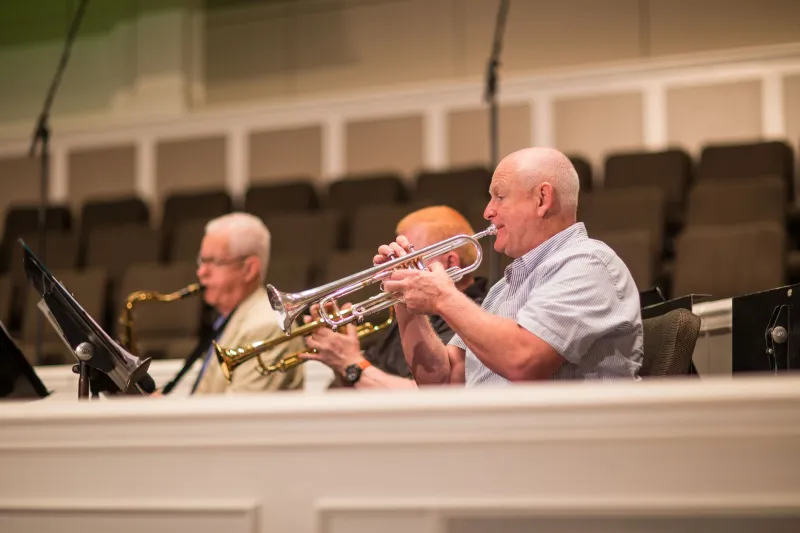
On a damp Tuesday evening in a village hall that smells faintly of damp carpet and instant coffee, something is happening that probably shouldn't still be happening. Fourteen people — ranging in age from fifteen to seventy-three — are running through a Sousa march with the kind of focused seriousness usually reserved for open-heart surgery. The trombone player, a retired scaffolder named Derek, winces at a wayward note from the euphonium section and taps his foot harder, as if sheer rhythm might compensate. It doesn't, quite. But then they hit a passage that locks together perfectly, and for a moment the whole room seems to breathe differently.
This is Radstock Silver Band, one of a small cluster of brass ensembles scattered across the old Somerset coalfield, and it has been making this particular kind of noise — imperfect, earnest, magnificent — since 1887.
Where the Bands Came From
The story of colliery brass bands in the West Country is one that often gets overshadowed by the more famous northern English tradition. Mention brass bands and most people picture Yorkshire villages or Durham miners. But Somerset had its own coalfield — the Somerset Coalfield, centred around Radstock, Midsomer Norton, and Paulton — and with it came its own musical culture, forged in the same working-class furnace.
Bands like these weren't formed for prestige. They were formed because men who spent their days underground needed somewhere to put the things that couldn't be said. They were funded initially by colliery companies — partly for morale, partly for the slightly cynical reason that a man rehearsing on a Wednesday night wasn't drinking in a pub. Over time, they became something else entirely: the social spine of the communities they served.
"My grandfather played cornet for this band," says Margaret Hollis, 61, who currently serves as the band's secretary and de facto emotional anchor. "My dad played. I played for twenty years before my arthritis got too bad. It's not just music for us. It's family history. It's who we are."
After the Pits Closed
The Somerset coalfield effectively died in the 1970s, the last collieries shutting well before Thatcher's war with the miners made the national news. The communities left behind faced the familiar post-industrial slump: unemployment, population drift, a slow erosion of identity. In that context, the survival of the bands feels almost miraculous.
Almost, but not quite. Because these bands haven't just survived passively — they've been fought for, year after year, by people who understood that losing the band would mean losing something irreplaceable.
"When the pit goes, the band is often the last thing standing that says 'we were here, we built something,'" explains Dr. Fiona Ashworth, a music historian at Bath Spa University who has spent the past four years documenting the region's brass band heritage. "These ensembles carry a form of collective memory that you can't digitise or put in an archive. The music is the memory."
That memory, however, is expensive to maintain. Instruments cost thousands of pounds. Conductors need paying. Rehearsal space, insurance, sheet music — it all adds up. Most bands in the region operate on fundraising and goodwill alone, a combination that has grown increasingly precarious.
The Recruitment Problem — and a Surprise
The national picture for brass bands is, frankly, not encouraging. Membership across British brass bands has been declining for decades, and the demographic profile — older, predominantly male, predominantly white — has become a cliché for a reason. So it's striking that here, in this particular corner of Somerset, something slightly different appears to be happening.
At Radstock Silver Band's Tuesday rehearsal, three of the players are under twenty. One of them, a sixteen-year-old named Callum who is already alarmingly good on the tenor horn, discovered brass music not through family tradition but through a school outreach programme the band launched three years ago.
"I thought it would be a bit naff, to be honest," he admits, with the cheerful candour of teenagers everywhere. "But then I heard what it sounds like when everyone's playing properly together and you're inside it. It's like nothing else."
The outreach programme — which visits local secondary schools and offers free taster sessions — was the brainchild of the band's conductor, Phil Garrett, 48, a former joiner who took up the baton after the previous conductor retired. Phil is not a trained musician in any formal sense. He learned by doing, by watching, by asking questions nobody thought to ask.
"The schools thing was a gamble," he says. "We had no money to do it properly. We borrowed instruments, cadged lifts. But kids respond to it when they realise it's real music, not something from a museum."
Beyond the Bandstand
What strikes you, spending time around these bands, is how much of what they do has nothing directly to do with music. The Paulton Brass Band — another survivor from the coalfield era — runs a junior section that has become, in practice, an informal youth club for a village that lost its last pub three years ago and its post office the year before that.
"We do the Christmas parade, we do the fêtes, we do the memorial services," says Sandra Price, who runs the Paulton juniors. "But we also just give kids somewhere to be on a Saturday morning where an adult is paying attention to them. That's not nothing."
It's a point that resonates with anyone who's watched the slow defunding of youth services across the region over the past decade. In the absence of statutory provision, organisations like brass bands have quietly stepped into the gap — not by design, but by instinct.
What They Need
Funding remains the central anxiety. Arts Council England has historically been more comfortable supporting organisations with glossy branding and urban reach, and community brass bands rarely fit that template. Local authority grants have shrunk to near-invisibility. Heritage Lottery funding is available in theory, but the application process is daunting for volunteer-run organisations without dedicated admin staff.
Dr. Ashworth believes there's a policy argument to be made — and that it isn't being made loudly enough. "These bands deliver social cohesion, mental health benefits, youth engagement, and cultural heritage preservation simultaneously," she says. "If a consultancy firm came up with a programme that did all that for the cost of a few instrument repairs and a rehearsal space, every council in the country would be throwing money at it."
For now, though, Radstock Silver Band will keep passing the collection tin at the Christmas concert, keep rattling off grant applications into the small hours, keep driving to schools in borrowed cars with borrowed tubas.
At the end of Tuesday's rehearsal, the Sousa march gets another run-through. This time it's tighter. Derek's foot taps more contentedly. Callum hits a run that makes the older players exchange a look — that particular look that means yes, that one's got it.
The damp carpet and the instant coffee and the slightly uneven plastic chairs don't seem to matter much, just then. The sound fills the room, and for a few minutes, the village is exactly what it always was.