Reading the Hedgerows: The Botanist Quietly Saving the West Country's Forgotten Plant Wisdom
Ros Trevithick keeps a notebook in her left coat pocket at all times. Not a phone — a notebook, the paper kind, slightly battered at the corners and stuffed with folded extra pages she's taped in when she ran out of space. On a recent morning in a Devon lane so narrow that the hedgerows almost met overhead, she stopped mid-conversation to write something down: the name of a plant her companion — an eighty-one-year-old retired farmer named Gerald — had just mentioned in passing.
"Stinking Bob," Gerald had said, almost to himself, pointing at a spray of pink-flowered herb-robert. "Mum used to make a poultice from that for the horses. And for cuts on the hands. Said it stopped things going rotten."
Ros wrote it down. She always writes it down.
What's Being Lost
Herb-robert — Geranium robertianum, to give it its proper name — is not a rare plant. You'll find it in hedgerows and walls from Cornwall to Cumbria. What is rare is the accumulated local knowledge about what it's for, how to use it, when to pick it, which specific preparation your grandmother's grandmother used in this particular valley with this particular soil.
That knowledge lives in people, not books. And people die.
Ros, who is forty-four and has a PhD in ethnobotany from Exeter University, has spent the past six years systematically documenting what she calls the "hedgerow code" of the West Country — a vast, informal body of plant wisdom that developed over centuries among farming and fishing communities and which is now, she believes, in genuine danger of vanishing within a generation.
"The academic literature on British ethnobotany is thinner than people assume," she says, crouching to examine a patch of cleavers — goosegrass, sticky willie, call it what you will — growing along the base of a Devon bank. "There's been good work done, but it's patchy. And so much of it was collected from secondary sources, from books about books. What I'm trying to do is go directly to the people who still have this in living memory."
The Method
Ros's approach is methodical without being clinical. She contacts local history societies, Women's Institutes, farming networks, and agricultural colleges, asking for introductions to older residents who grew up with a close relationship to the land. She then visits them — often multiple times — and simply talks. She asks what their parents called things. What they did with them. What they were warned against. What they swore by.
The conversations meander, as such conversations do. Gerald, on this particular morning, has moved from herb-robert to his mother's remedy for whooping cough (wild thyme in honey, specifically the thyme from the south-facing bank above the lower field), to the particular way his grandfather read the state of the blackthorn blossom to predict the spring planting weather, to a plant name — "crakeberry" — that neither Ros nor Gerald can definitively identify from description alone.
"That's the thing," Ros says later, flipping back through her notebook. "The plant names are incredibly local. The same plant might have four different names within twenty miles. Which is wonderful from a cultural history perspective, and absolutely maddening from a cross-referencing perspective."
She has so far documented over three hundred distinct pieces of plant lore specific to Devon, Somerset, and Cornwall — remedies, weather signs, culinary uses, livestock treatments, and what she carefully describes as "ritual or superstitious applications" (which in practice means things like the Cornish habit of leaving elder branches at the door to keep ill luck out, and the Somerset belief that cutting down a rowan tree brought misfortune to the cutter).
Why It Matters
It would be easy to frame this as charming antiquarianism — the preservation of curious old customs for their own nostalgic sake. Ros is impatient with that framing.
"Some of this is genuinely pharmacologically interesting," she says, with some force. "Herb-robert, as it happens, has been investigated for antimicrobial properties. The traditional use of meadowsweet for pain — which was widespread in this region — is directly related to the salicylate compounds it contains. Aspirin comes from willow bark, which Devon hedgerow-wisdom knew about for centuries before the pharmaceutical industry got there."
But it's not only about rediscovering potential medicines. Ros is equally interested in what this knowledge tells us about the relationship between people and landscape — a relationship she believes is being severed at an alarming rate, with consequences that go beyond the merely sentimental.
"When people knew their hedgerows," she says, "they had a stake in them. They noticed when something changed. They could read what the plants were telling them about the soil, the water, the season. We've lost that literacy almost entirely in two or three generations. That's not just a cultural loss — it's an ecological one."
The Archive
Ros is working towards a publicly accessible digital archive — annotated, mapped, and cross-referenced — that will allow researchers, foragers, educators, and the simply curious to explore the material she's gathering. She's working with a small team of volunteers and has secured modest funding from a heritage trust, though she's candid about the financial precariousness of the project.
"I have enough to keep going for another eighteen months, probably," she says. "After that, I'll need to find more, or stop. And stopping isn't really an option, because the people I'm talking to aren't getting any younger."
There's an urgency in that which she doesn't try to disguise. Gerald, who she has now visited four times, has been one of her most valuable sources — a man with a remarkable memory and a genuine enthusiasm for the project. Between visits, he has been writing things down himself, unprompted, filling exercise books with plant names and uses and stories he'd assumed nobody wanted.
"He told me he'd never thought anyone would care," Ros says. "That broke my heart a bit, honestly. This is his inheritance, his family's knowledge, and he'd assumed it was worthless."
What the Hedgerows Still Say
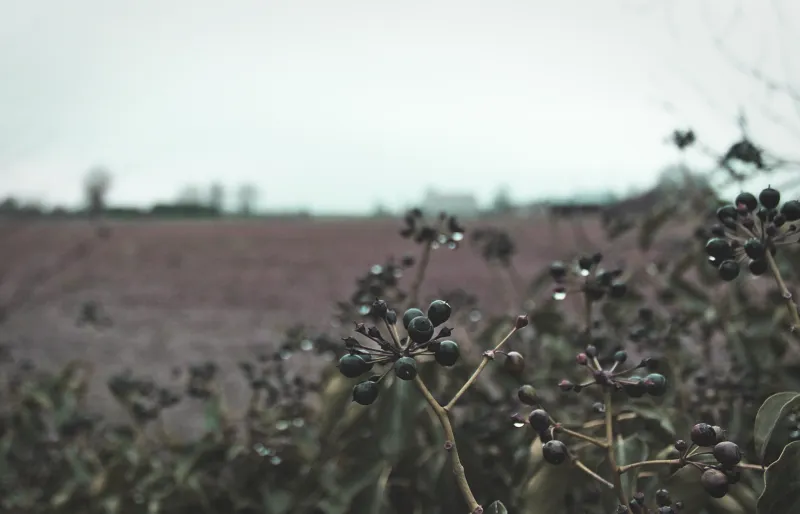
By mid-morning, the lane has opened out into a broader track running along the edge of a Devon combe. The hedgerow here is extraordinary — ancient, layered, dense with species that a trained eye can use to date it to several centuries at least. Ros identifies, in quick succession, dog rose, blackthorn, hazel, field maple, dogwood, and a stand of spindle she's particularly pleased about.
"People walk past this every day and see a hedge," she says. "But this is a library. Every species in here is a sentence in a story about this land and the people who've managed it."
She takes her notebook from her pocket and writes something down. She doesn't say what. Some knowledge, perhaps, is still best kept on paper.