Mud on Their Boots and Stars in Their Eyes: The Young Families Going Back to the Land
The goats got out again on the morning we visited. This is, apparently, just something that happens when you keep goats. Priya and Tom Ashworth-Cole were philosophical about it — Priya rounding them up with the practised efficiency of someone who has done this before (she has, many times), Tom finishing his coffee and looking mildly embarrassed by the whole thing. Their three-year-old daughter thought it was brilliant.
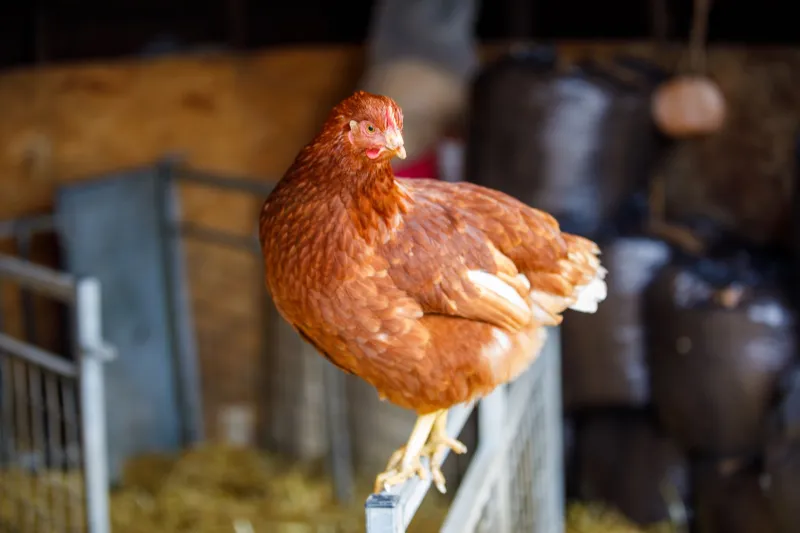
Eighteen months ago, Priya was a project manager for a Bristol tech firm and Tom was teaching secondary school maths. They lived in a two-bedroom terrace in Bedminster, owned one small car and spent their weekends in coffee shops, talking vaguely about wanting something different. Now they're on four acres of Somerset hillside, keeping chickens, ducks, two pigs and the aforementioned escape-artist goats, growing more vegetables than they can eat and selling the surplus at a local market. They are, by almost any measure, happier. They are also, by almost any measure, exhausted.
"Nobody tells you how physical it is," says Priya, once the goats are secured. "I thought I was reasonably fit. I was not."
The Great Relocation
The Ashworth-Coles are not alone. Across Devon, Somerset, Cornwall and Dorset, a quiet but significant movement is underway. Young families — many of them city-dwellers who spent the pandemic years reconsidering what they actually wanted from life — are making the move to smallholdings, attracted by lower land prices relative to the southeast, a growing community of like-minded settlers and a vague but powerful desire to live more directly.
The numbers are hard to pin down precisely, but estate agents and rural letting agencies across the region report sustained demand for small agricultural holdings — anything from one to twenty acres — from buyers with no farming background. The Soil Association has noted a rise in new entrants to small-scale food production. And in Facebook groups and community forums dedicated to West Country smallholding life, membership has ballooned since 2021.
The reasons people give are varied. Cost of living, burnout, environmental anxiety, a desire for community, the pull of raising children somewhere with space and silence. Often it's a combination of all of these, crystallised by some specific moment — a redundancy, a difficult winter, a particularly grim commute — that tips the balance.
"We'd been talking about it for years," admits Dan Fellowes, who moved from south London to a five-acre plot near Totnes with his partner Kieran and their two children in 2022. "And then Kieran got made redundant and we just thought — why are we waiting? What are we waiting for?"
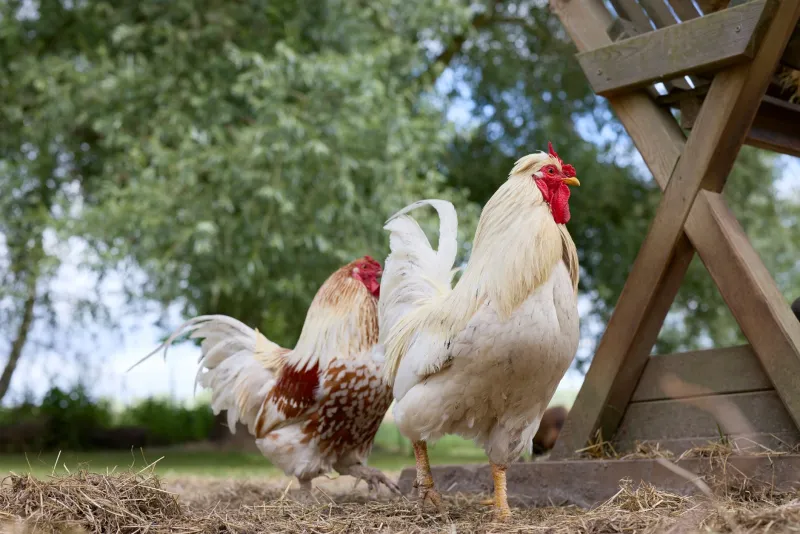
Reality Bites (and So Does the Cockerel)
The gap between the fantasy and the reality of smallholding life is well-documented, and the people who've made the leap are refreshingly honest about it. There is mud. There is a great deal of mud. There are animals that get sick at inconvenient times, crops that fail for no obvious reason, machinery that breaks down in the middle of tasks that absolutely cannot be interrupted. There is the discovery that growing your own food is deeply satisfying and also enormously time-consuming.
There is also the money. Smallholdings require capital — for land, for infrastructure, for livestock, for equipment — and most new entrants are drawing on some combination of savings, equity from a sold property and, in many cases, a continued part-time income from their former careers. The idea of full self-sufficiency is, in practice, more of a direction of travel than a destination.
"We're probably about forty per cent self-sufficient in food right now," says Priya. "Which sounds impressive until you realise you still need to buy pasta and olive oil and all the things that just aren't possible here. We're not off-grid. We're just... differently dependent."
Dan Fellowes is more blunt. "The first year, we lost money on everything. The chickens cost more to keep than we made selling eggs. The veg patch produced about half of what we expected. We made every mistake in the book." He pauses. "The second year was better. This year we're actually breaking even on the market stall, which feels like a miracle."
Growing Community
One of the unexpected rewards that comes up again and again in conversations with new smallholders is community. The West Country's established farming networks — the shows, the markets, the informal networks of neighbours and suppliers — can be initially hard to penetrate for incomers without agricultural roots. But many of the new arrivals have found each other, forming informal support networks that share knowledge, equipment, labour and, crucially, the kind of honest conversation that prevents mistakes from becoming disasters.
In mid-Devon, a loose collective of eight young families — all smallholders, all within a fifteen-mile radius — has been meeting monthly for two years. They share a tractor, pool their knowledge on animal husbandry and take turns running a joint stall at a local farmers' market. One member describes it as "the village we were all looking for but couldn't find anywhere else."
"We came here partly to escape isolation," says one of the collective's founding members, a former graphic designer named Saoirse who moved from Bristol with her husband and twin sons. "And we found the opposite. I've got better friends here than I've had anywhere."
What the Land Teaches
There's something else the smallholders talk about that's harder to articulate — a shift in how they experience time, seasons, food, effort and reward. Growing something, killing it, eating it. Understanding where a meal comes from in a way that goes beyond reading a label. Watching children who were born in cities learn to read weather, to handle animals, to be useful.
"My daughter knows where eggs come from," says Priya, watching the three-year-old in question attempt to negotiate with one of the goats. "She knows where milk comes from. She knows what a pig smells like and why that's okay. That feels important. I can't fully explain why, but it does."
Back in Bedminster, their old house is now someone else's. The coffee shops are still there. The commute is still happening, for someone. And out here on the Somerset hillside, the goats are already testing the fence again.
"Wouldn't change it," says Tom, rinsing his mug under the outdoor tap. "Even on the bad days. Especially on the bad days, actually."
Thinking about making the move? The Farming Community Network (fcn.org.uk) and the Soil Association offer guidance for new entrants to smallholding and small-scale food production.